
Clovis Concrete Crew installs stamped concrete and decorative concrete for patios, pool decks, walkways, and driveway borders in Clovis. Stamped concrete gives you the look of slate, stone, brick, or wood at the strength of a poured slab, without the weeds and shifting pavers that come with loose units.
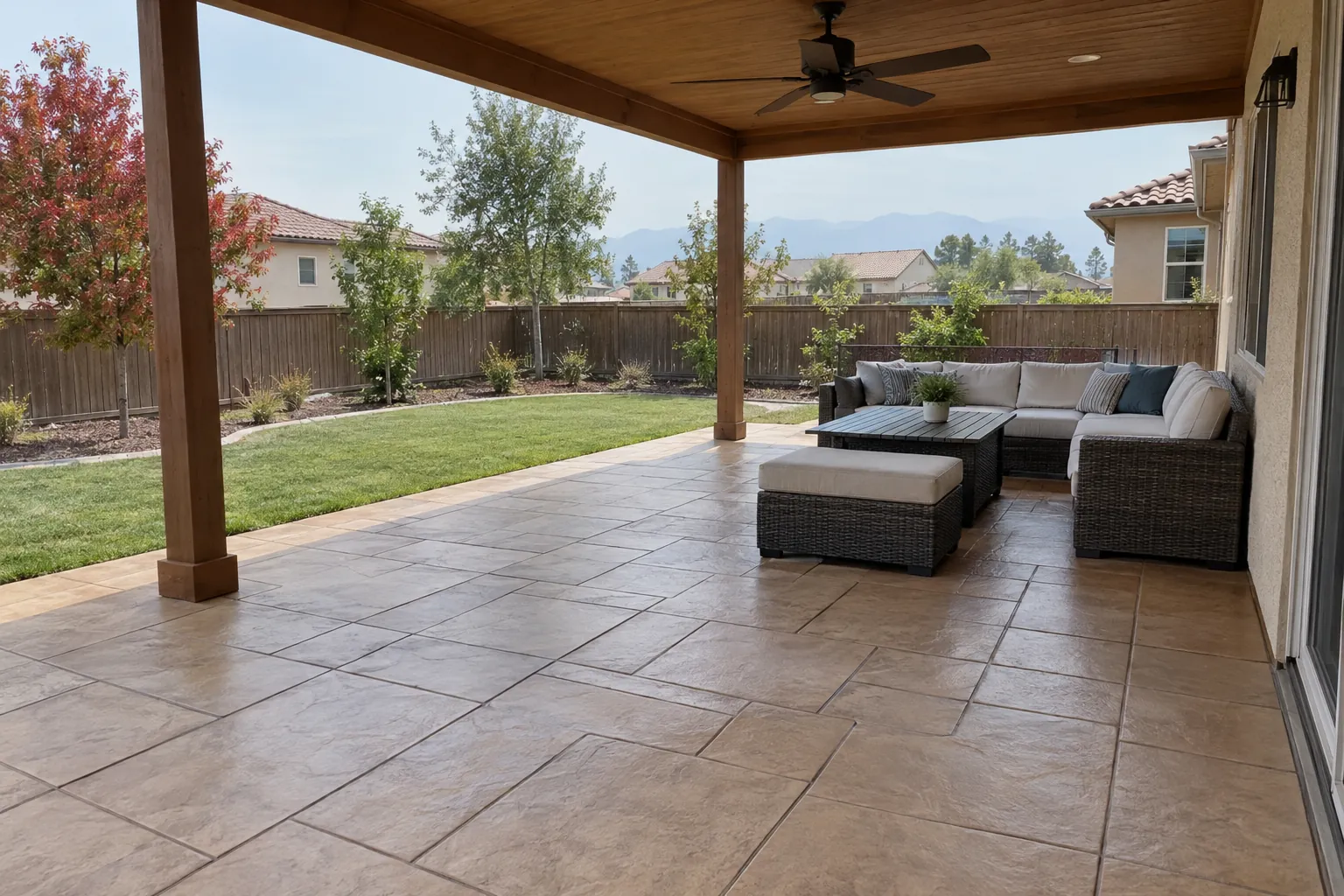
Popular Stamped Patterns
- Ashlar slate: rectangular stones of mixed sizes, the most popular pattern for patios
- Random stone and flagstone: irregular shapes for a natural, rustic look
- Cobblestone and European fan: smaller units, often used for borders and walkways
- Running bond and herringbone brick: good for driveway borders and front entries
- Wood plank: board-textured concrete that reads like a deck without the splinters or rot
- Seamless texture: stone texture with no grout lines, easier to clean and gentler underfoot
How Color Works
Integral color
Pigment is mixed into the concrete at the plant, so the color goes all the way through. If the surface wears or chips, it stays the same color underneath.
Color hardener
A dry-shake powder broadcast onto the fresh surface and troweled in. It gives a denser, harder top layer and stronger color.
Release color
A contrasting powder or liquid applied before the stamping mats go down. It keeps the mats from sticking and settles into the grooves, giving the "grout line" and highlight look.
Picking colors for Valley sun
Lighter base colors stay cooler and show less fading over time. Sandstone, buff, light gray, and desert tan are common choices here. Darker colors like charcoal look sharp but get hot underfoot, so we often use them for borders rather than whole patios or pool decks.
How Stamping Is Done
- Base, forms, and reinforcement go in just like any slab.
- The concrete is placed, screeded, and floated, with color added at the plant or broadcast on top.
- Release agent is applied.
- When the surface is firm enough to hold an impression, the crew lays texture mats in sequence and tamps them in.
- Edges and tight spots are detailed by hand with texture skins.
- The next day the release is washed off, joints are cut, and later the surface is sealed.
Timing is everything with stamping, and in summer heat the window to stamp can close fast. We pour early in the morning, keep the crew sized for the area, and use evaporation retarders when needed.
Sealing Stamped Concrete
Sealer brings out the color and protects against stains and sun. We use UV-stable sealers, since cheaper acrylics can yellow or turn cloudy in intense sun. Plan to reseal every two to three years, more often on pool decks and in full sun.
Other Decorative Options
Exposed aggregate
The surface paste is washed away to reveal the stone in the mix. It's tough and slip-resistant.
Stained concrete
Acid or water-based stains give mottled, variegated color to new or existing slabs.
Decorative borders
A stamped or colored band around a plain broom-finish slab gives a custom look at a lower cost than stamping the whole area.
Where Stamped Concrete Works Best
Patios and outdoor kitchens are the most common. It also works for pool decks with a light color and gentle texture, front walks and entries, and borders on driveways. For a full patio plan, see concrete patios.