
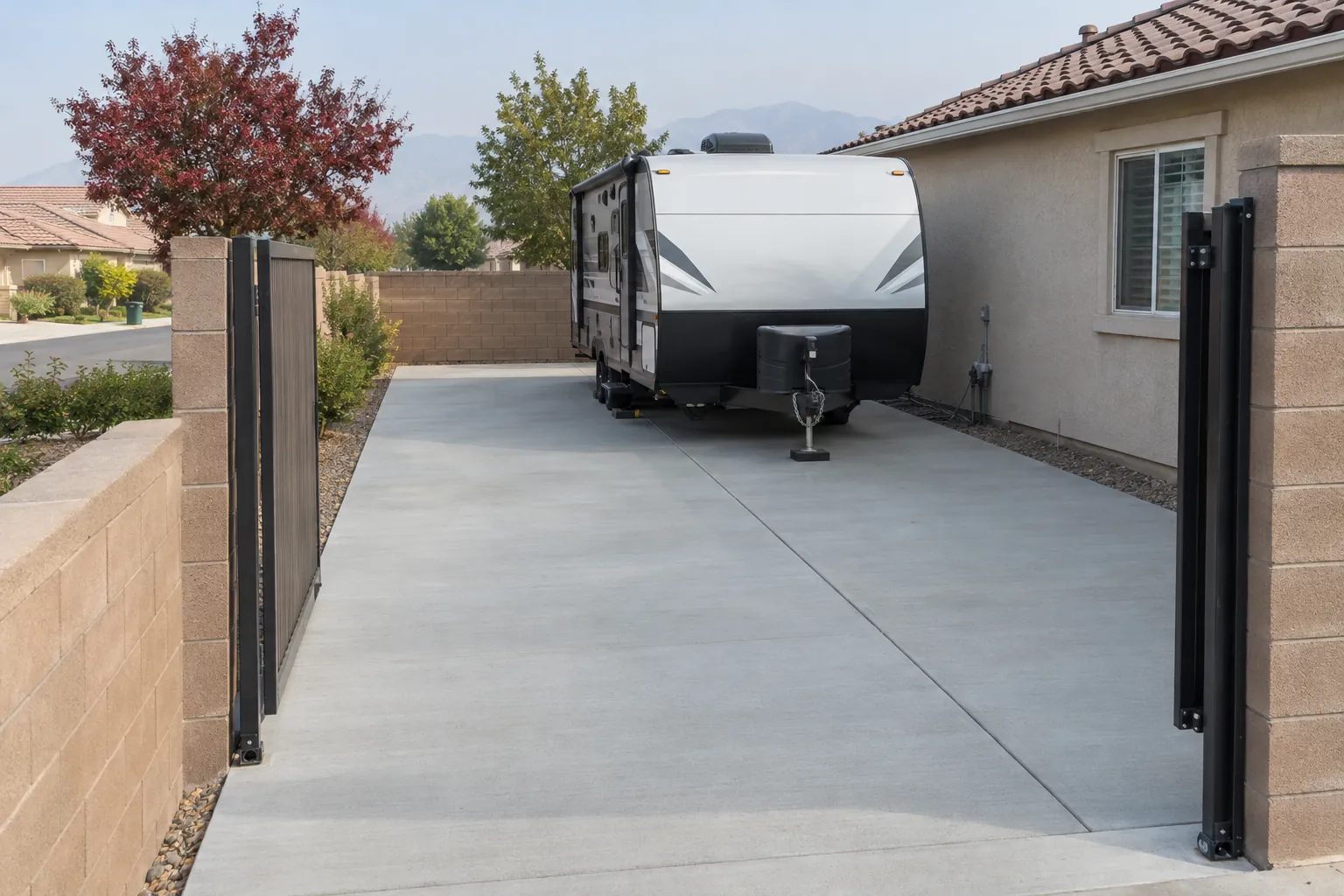
Clovis Concrete Crew builds concrete RV pads, boat pads, and slabs for sheds, workshops, detached garages, and hot tubs across Clovis. Side-yard RV and boat parking is common in the Valley, and a heavy trailer parked on dirt or thin concrete sinks, ruts, and cracks. An RV pad has to be built for weight from the ground up.
RV and Boat Pads
Thickness
A travel trailer, fifth wheel, or motorhome concentrates a lot of weight on a few tires and jacks. We usually pour RV pads 5 to 6 inches thick, compared with 4 inches for a typical driveway, with thickened edges along the side where tires roll on.
Reinforcement
Rebar, typically #4 bars set on chairs in a grid, keeps the slab working as one piece. Mesh alone isn't our choice under heavy vehicles.
Size
A pad should be longer and wider than the RV so you can open slide-outs, walk around it, and back in without dropping a tire off the edge. Common sizes run about 12 feet wide and 35 to 50 feet long, but we measure your rig and the side yard.
Access
Side-yard pads often need a gate widened, a section of fence moved, or a new curb approach. A new or widened approach at the street needs a City of Clovis encroachment permit with a construction drawing and traffic control plan. We handle that.
Hardpan
A deeper pad and thickened edge can reach the cemented hardpan common in Clovis soils. We break through where needed instead of leaving a soft layer above it, and we plan drainage so water doesn't pond along the side of the house.
Shed, Workshop, and Garage Slabs
Shed slabs
A slab gives a shed a level, rot-proof floor. We size it a few inches larger than the shed footprint, usually 4 inches thick with a thickened perimeter.
Workshop and detached garage slabs
These need a thickened perimeter footing and may need anchor bolts or hold-downs placed in the fresh concrete. Most detached garages and larger structures need a building permit, and the slab must match the approved plans. Tell us about your plans before we pour.
Hot tub pads
A filled hot tub is extremely heavy. We pour a level 4 to 6 inch reinforced pad sized to the tub, with a conduit sleeve for the electrical run if needed.
Other Slabs
- Basketball half courts
- Trash can and side-yard utility pads
- Equipment pads for pool pumps and AC units
- Dog run slabs that hose off easily
Pouring Big Slabs in the Heat
Large flat slabs lose water fast in the sun. We pour early, dampen the base, finish quickly, and cure with water or a curing compound so the surface stays strong. Joints are saw-cut the same day.
Planning Ahead
If you might add a carport or RV cover later, we can pour footings for the posts during the same job. It's far easier than cutting into a finished pad. If you're also extending the driveway, see concrete driveways.