
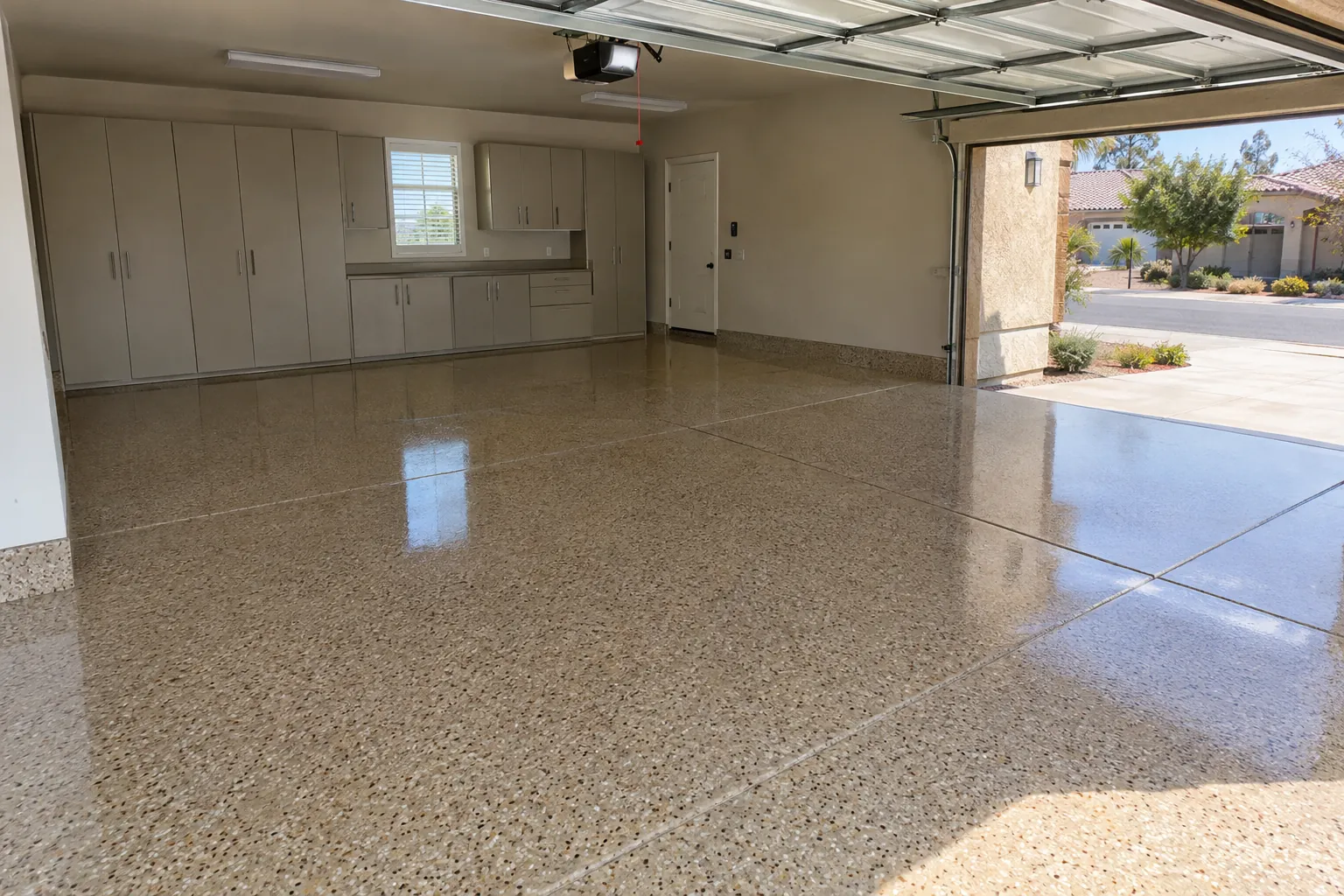
Clovis Concrete Crew installs epoxy garage floors and polyaspartic floor coatings in Clovis, turning dusty, stained garage slabs into floors that clean up with a mop. In the Valley, the garage is often a workshop, a gym, a home for the second fridge, and the coolest place to park in August, so the floor sees real use.
Why Garage Heat Changes the Coating Choice
Clovis garages get hot. When outside temperatures sit above 100 degrees for weeks, an attached garage with the door closed can run much hotter than the house, and that matters for floor coatings in three ways:
- Working time. Epoxy cures faster as temperatures rise. In summer we coat early in the morning so the material levels and bonds before it kicks off.
- Hot tire pickup. A car driven in on a hot day can soften and lift a weak coating. Thin one-part paint-on kits are the usual victims. Fully bonded epoxy or polyaspartic systems on a ground slab resist it.
- UV and yellowing. Standard epoxy can amber over time where sunlight hits it through an open door. A polyaspartic or polyurethane topcoat holds its color better.
Epoxy Garage Floor Systems
100 percent solids epoxy
A thick, durable base coat that bonds well to properly prepared concrete. It's the backbone of most garage systems.
Polyaspartic coatings
A fast-curing, UV-stable coating used as a topcoat over epoxy or as a full system. It can often return a garage to use sooner, and it resists yellowing in sun.
Decorative flake
Vinyl color flakes broadcast into the base coat give texture, hide dust and small imperfections, and add grip. Full broadcast covers the floor completely; partial broadcast leaves more solid color showing.
Metallic and solid color
Solid gray or tan floors look clean and simple. Metallic epoxy gives a swirled, glossy look more common in show garages and shops.
Preparation Is Most of the Job
- Moisture check. Slabs without a good vapor barrier can push moisture up and lift a coating, so we test before we commit.
- Diamond grinding. We grind the whole floor to open the surface so the epoxy bonds to the concrete itself.
- Crack and spall repair. Cracks are chased and filled, and chipped areas are patched flush.
- Joint treatment. Control joints are filled or kept open depending on the system and how you use the space.
- Coating. Base coat, flake if chosen, then the topcoat.
Acid etching alone, the step in most store-bought kits, doesn't open the surface the way grinding does, and it's the most common reason DIY floors peel.
Living With an Epoxy Floor
- Sweep grit regularly; it acts like sandpaper under tires.
- Clean with a mild, pH-neutral cleaner.
- Wipe up oil, brake fluid, and battery acid quickly.
- Use mats under kickstands and jack stands.
If the slab itself is badly cracked or uneven, we may suggest concrete repair or resurfacing first, or a ground and polished concrete finish instead of a coating.