
Clovis Concrete Crew handles concrete resurfacing, cool-deck coatings, and sealing for Clovis homes, renewing driveways, patios, walkways, and pool decks that are still solid underneath but worn, faded, or stained on top. In a town that sees roughly 38 days a year over 100 degrees and almost cloudless summers, the surface of a slab takes a beating long before the slab itself gives out.
What Sun and Heat Do to a Concrete Surface
Most tired concrete we look at in Clovis has the same set of complaints:
- Faded color. Integral color and stains on stamped work wash out after years of strong summer sun.
- Chalky or peeling sealer. Cheap acrylic sealers break down under UV and turn white, cloudy, or flaky.
- Rough, worn paste. The thin cream layer on top wears away, exposing sand and small stone.
- Hot spots on pool decks. Darker or bare concrete around a pool gets uncomfortable for bare feet by midafternoon.
- Rust, oil, and sprinkler stains. Hard water from irrigation leaves white mineral deposits and orange streaks along the edges.
None of those mean the slab has failed. If the concrete is sound, a new surface usually costs far less than tear-out and replacement.
Concrete Resurfacing Options We Use
Polymer-modified overlay
A cement-based overlay blended with polymers that bonds to the old slab in a thin layer, usually about 1/8 to 3/8 inch. It can be troweled smooth, given a broom texture, or applied as a knockdown or spray texture. This is the go-to for a driveway or patio with worn paste and scattered surface damage.
Stamped overlay
A thicker overlay layer, typically about 1/4 to 3/4 inch, that can take stamp mats. It gives a plain gray patio the look of slate, stone, or wood without pouring a new slab. See stamped and decorative concrete for patterns.
Cool-deck coatings for pool decks
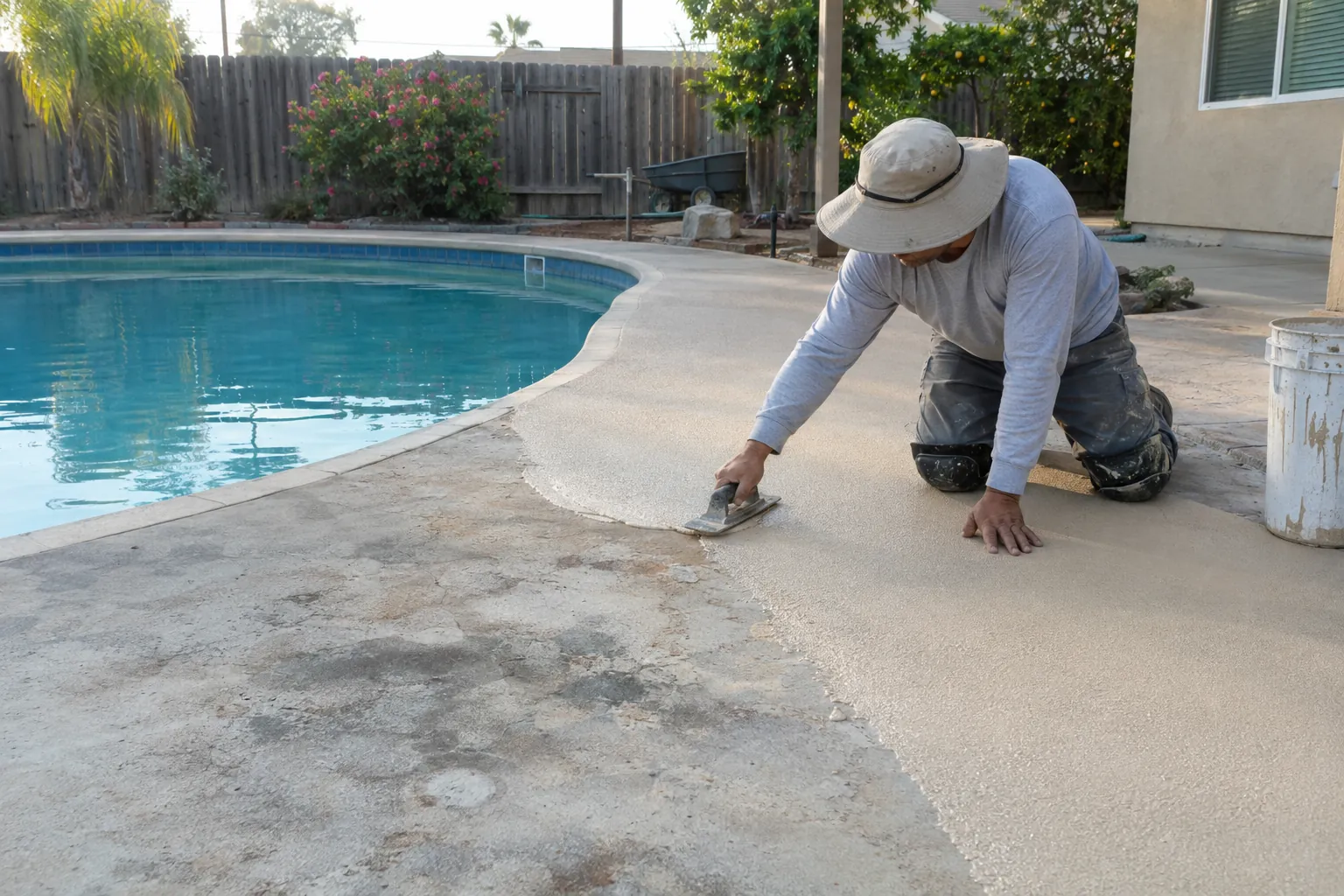
A textured, light-colored acrylic or cement-based coating troweled onto the pool deck in a knockdown pattern. The lighter color and texture keep the surface more comfortable underfoot than bare or dark concrete and add grip around the water. These coatings are popular across the Central Valley because of how hot the summers get. They need periodic recoating as the top layer wears.
Penetrating and topical sealers
- Penetrating silane or siloxane sealers soak into the concrete and repel water and stains without changing the look. They hold up well in direct sun because there's no film to peel. - UV-stable acrylic or polyurethane sealers sit on top, deepen color, and add a satin or wet look on stamped and colored work. They need to be rated for exterior UV exposure, or they'll yellow and fail early here.
How a Clovis Resurfacing Job Goes
- Inspection. We check for hollow spots, moving cracks, and sunken sections. Resurfacing over a slab that's still moving just copies the crack to the new surface.
- Repair first. Structural cracks are routed and filled, and broken or settled panels are replaced. See concrete repair.
- Surface prep. The old sealer and contamination come off by grinding or pressure washing so the overlay can bond.
- Joints honored. Existing control joints are kept open or re-cut through the new layer so cracks stay where they belong.
- Application in the cool hours. In summer we start at first light. Overlays and coatings applied on a 105 degree slab skin over and lose working time fast.
- Cure and seal. Foot traffic usually resumes within a day, and vehicles after a few days depending on the system.
When Resurfacing Isn't the Answer
If the slab has heaved, broken into several pieces, or sits over soft ground that keeps settling, a new surface won't fix it. Large shifts often come from water sitting on top of the hardpan that lies under much of Clovis, softening the soil right below the slab. In those cases replacing the bad sections, with proper base and drainage, is the better spend. We'll tell you which way we'd go and why.
Keeping a Resurfaced Slab Looking New
- Reseal decorative and stamped surfaces every two to three years, depending on sun and traffic.
- Aim sprinklers away from concrete; hard water spotting is the most common complaint we see.
- Clean oil and pool chemicals quickly. Strong acids and chlorine splash dull some sealers.
- Recoat cool-deck surfaces before the texture wears smooth.